


Latest news
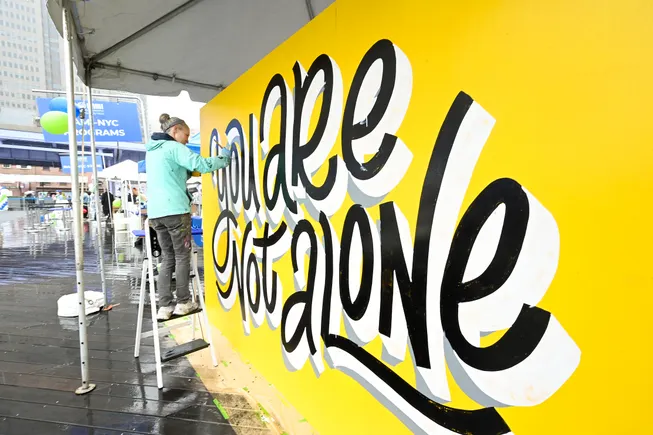
In this article, Chaim Book, senior partner at Book Law LLP, explains that the Americans with Disabilities Act requires a genuine interactive process when handling accommodation requests, not just a correct decision. He illustrates with an example of an employee taking every Tuesday off for mental health and warns that skipping the process can lead to liability even if the final decision is defensible. Book advises employers to document requests, ask for medical substantiation, identify essential job functions, include a second person in conversations, and treat employees with respect to avoid legal disputes.

Judge Glenn Suddaby dismissed Wright v. Cornell University, finding the plaintiff lacked standing to challenge Cornell's DEI hiring policies. The court determined the plaintiff had publicly stated he left academia and had no intention of applying for a position at Cornell, making him unable to show he was 'able and ready' to apply. The ruling avoided addressing the merits of the DEI discrimination claims. The case highlights the importance of standing in hiring discrimination lawsuits, especially as similar challenges to corporate DEI policies gain traction.

Toshiba CHRO Jason Desentz told HR Dive that Generation Z lacks workplace AI skills, as universities often discourage AI use. Toshiba is addressing this by providing Copilot licenses to interns, offering an AI readiness course, and encouraging employees to build AI agents for tasks like payroll and attendance. Desentz emphasizes adaptability and continuous experimentation, comparing AI adoption to the internet shift. He recommends companies identify internal AI champions to drive experimentation and mobilization.
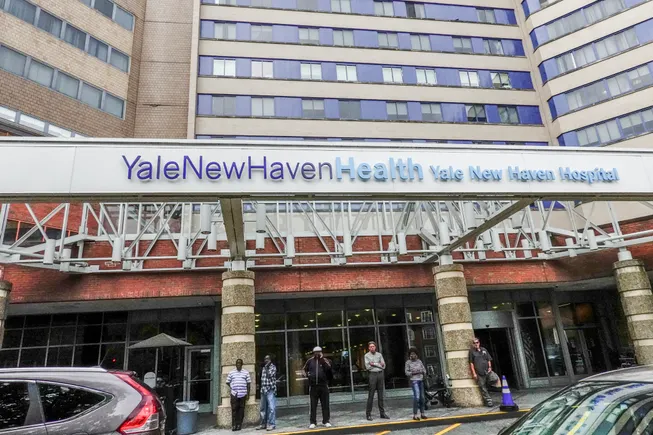
A U.S. Equal Employment Opportunity Commission lawsuit against Yale New Haven Hospital will proceed to trial, a federal judge ruled Friday. The EEOC alleges the hospital's Late Career Practitioner Policy, which mandates ophthalmic and neuropsychological testing for physicians and practitioners aged 70 and older seeking clinical privileges, discriminates based on age in violation of the Age Discrimination in Employment Act and the Americans with Disabilities Act. The hospital maintains the policy ensures patient safety. The court found factual questions exist as to whether age is a legitimate proxy for safety-related job qualifications. The case highlights broader issues of age discrimination in the workplace, including hiring biases and recent litigation such as Mobley v. Workday.

The most-clicked story of the week examines whether employees can preserve PTO during ADA-approved leave, with attorneys advising employers to ask three key questions. Allegheny County passed the first countywide paid parental leave policy in the U.S., requiring employers with 15+ workers to provide 12 weeks of leave. The Conference Board reports that rapid AI integration may cause managerial bottlenecks and change fatigue. LiveCareer finds nearly 8 in 10 men hide mental health struggles at work. The EEOC sued CityCare Health Services and Jaco Enterprises for failing to honor conciliation agreements. Dan Rust of Infopro Learning suggests Gen Z isn't more disengaged, just less adept at hiding it.
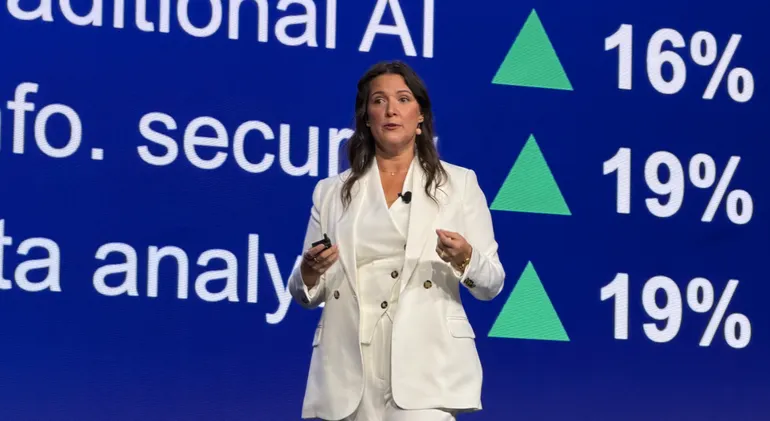
A Gartner survey of 2,002 CIOs and technology executives found that only 4% have plans in place to redesign roles for an agentic era workforce. Those that do are 2.4 times more likely to be top AI performers. With 58% facing increased demand for cost improvements from AI investments and just 13% reporting significant value from AI, many CIOs are deprioritizing workforce strategy. Gartner VP Analyst Alicia Mullery says CIOs can elevate the conversation by addressing AI's workforce impact, from role scope shifts to salary dynamics.

A KPMG study of over 1,300 CEOs worldwide reveals that just 9% see AI agents as transformational for their organizations, despite 84% ranking AI as a top investment priority and 65% planning to allocate at least 10% of capital budget to AI. While nearly 4 in 10 report significant efficiency or growth improvements from AI agents, CEOs also face rising concerns over cybersecurity, inflation, and geopolitical tensions, with 85% citing cybercrime as a major impact on prosperity.

AI Splits HR into Two Archetypes: Technologist-Strategist and Compliance Operator, Draup Study Finds
A study by Draup, released Oct. 14, reveals that AI is splitting HR into two distinct archetypes: the HR technologist-strategist, who combines people analytics, SQL and Python with platform ownership and transformation governance, and the HR compliance operator, who pairs labor law and FMLA expertise with accurate platform operation. The analysis of live job descriptions across 18 HR roles from July 2025 to July 2026 found that data analytics skills are now required in every HR role, while postings for traditional administrative skills are declining. The report warns that job descriptions written for a single generalist profile risk hiring the wrong archetype. It also notes that diversity and inclusion managers now need data literacy, signaling a shift from advocacy to accountability, and that CHROs are being repositioned as transformation drivers.

The U.S. Department of Labor has announced more than $81.5 million in grant funding to support workforce training in rural communities across the Appalachian, Delta, and Northern Border regions. The grants, part of the seventh round of the Workforce Opportunity for Rural Communities program, aim to address critical workforce needs in high-growth industries such as skilled trades, healthcare, IT, manufacturing, and domestic energy production. The funding will support industry-driven training initiatives, including Registered Apprenticeships, and help new and dislocated workers, as well as those seeking to upskill. The program, administered by DOL's Employment and Training Administration, supports 13 projects across 11 states and is designed to increase employment opportunities and wage growth. Secretary of Labor Keith Sonderling emphasized the grants' role in providing pathways to in-demand jobs. The initiative partners with the Appalachian Regional Commission, Delta Regional Authority, and Northern Border Regional Commission.

According to a survey released Tuesday by Gallup and the Lumina Foundation, 48% of employers think higher education will become more important over the next five years amid growing AI use, while 26% believe it will become less important. The survey also found that 60% of employers have high confidence in higher education as an institution, and 80% prefer candidates with college degrees regardless of position requirements. The report's authors note that employers do not appear to be turning away from degrees for now. The survey was based on an August online poll of over 2,500 hiring decision-makers.