


Tech & Analytics

The American Humanist Association announced that the University of Kentucky granted a religious accommodation to a humanist employee, excusing him from using AI because it violates his deeply held beliefs. The university's equal opportunity office determined that nonuse of AI posed no undue burden on the department. This case underscores an emerging compliance issue as workplace AI intersects with religious beliefs, especially following increased religious discrimination claims and the Supreme Court's 2023 Groff v. DeJoy decision, which raised the bar for showing undue hardship.

Oyster's 2026 Global AI Talent Report analyzes approximately 15,000 job descriptions filled through its platform between 2022 and the first half of 2026, alongside a survey of over 1,000 HR and People leaders. The report finds that AI skill requirements have tripled from 5% to 15% of roles, expanding into non-technical functions like marketing, recruiting, and operations. However, most companies have not updated job titles, pay, or formal communications to reflect these new expectations. The report also highlights a global shift, with 53% of employers preferring to train existing staff and internationally recruited candidates more common among companies prioritizing external AI hiring. It concludes with practical steps for people teams to align job architecture, compensation, and hiring criteria with the changing workforce.

New Gartner research shows that although three-quarters of board members expect productivity and savings ROI from AI, 97% of organizations cannot cut expenses solely through productivity measures. Thirty-eight percent are over budget on AI and 85% plan to spend more next year. The study also found that 78% of leaders are not aligned on how AI is helpful, and only 21% of time saved by AI is redirected into innovative work. HR teams need to work with leadership to ensure AI strategies bring value and prepare for employee implications.
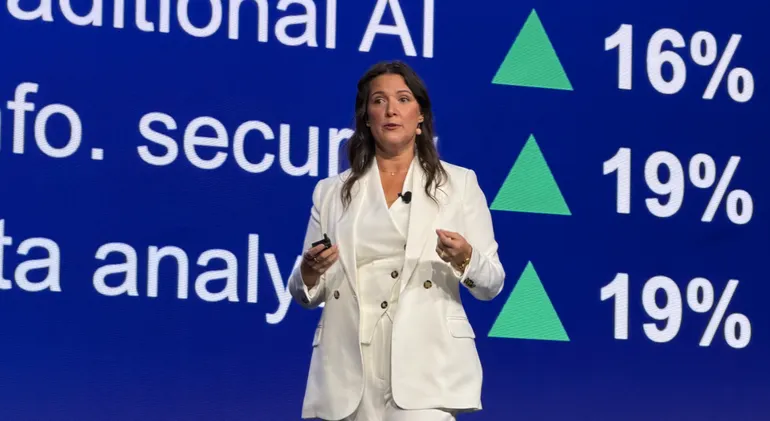
A Gartner survey of 2,002 CIOs and technology executives found that only 4% have plans in place to redesign roles for an agentic era workforce. Those that do are 2.4 times more likely to be top AI performers. With 58% facing increased demand for cost improvements from AI investments and just 13% reporting significant value from AI, many CIOs are deprioritizing workforce strategy. Gartner VP Analyst Alicia Mullery says CIOs can elevate the conversation by addressing AI's workforce impact, from role scope shifts to salary dynamics.

A KPMG study of over 1,300 CEOs worldwide reveals that just 9% see AI agents as transformational for their organizations, despite 84% ranking AI as a top investment priority and 65% planning to allocate at least 10% of capital budget to AI. While nearly 4 in 10 report significant efficiency or growth improvements from AI agents, CEOs also face rising concerns over cybersecurity, inflation, and geopolitical tensions, with 85% citing cybercrime as a major impact on prosperity.

A BambooHR survey reveals that employees use AI for about 1.5 hours per day on average, with nearly half of that time (approximately 20 days per year) spent troubleshooting AI errors or adjusting prompts. Despite such inefficiencies, 65% of employees still feel confident and enthusiastic about AI. The survey also found that executives use AI about twice as much as regular employees, and that AI is transforming knowledge transfer and interpersonal collaboration in the workplace.

The California Assembly passed a bill on Sunday that would prohibit employers from using artificial intelligence tools to monitor employees' personal emotional states or collect their 'neural data.' The bill (AB 1883) has been sent to Governor Gavin Newsom for signature, and if approved, it will take effect on January 1, 2026.

Enterprises have invested in human capital management (HCM) technology for years, yet most still struggle to achieve expected value. The 3Sixty Insights benchmark report found that only 13% of organizations fully utilize their HCM solutions, 12% consider themselves advanced users, and 86% of users have encountered issues related to HR, payroll, or benefits. Keisha Forbes, Director of Strategic Customer Experience at Insperity, points out that the biggest challenge is adoption rather than technology, and emphasizes how the "fragmentation tax" erodes operational costs and employee trust. The article analyzes the reasons behind the value gap and proposes achieving return on investment through human-centric collaboration and ongoing support.

Against the backdrop of AI gradually permeating school district operations, multiple district HR leaders point out that while technology can handle a large volume of transactional tasks, critical decisions must retain human judgment. This article explores AI's practical applications in personnel management, governance frameworks, and data privacy challenges through case studies of Fairfax County Public Schools in Virginia and Indianapolis Public Schools.
A Gallup global CHRO roundtable survey reveals that among 102 chief human resources officers, half lack confidence in managers' ability to guide employees in using AI. To address this challenge, 57% of CHROs are providing AI training for managers, and 62% are establishing centers of excellence and internal AI advocates. The survey also found that employee sentiment regarding AI's impact on workplace culture is divided, but clear communication and resource support from managers can promote positive acceptance.