


Tech & Analytics
Only 4% of CIOs Have Plans to Redesign Roles for Agentic Workforce, Gartner Finds
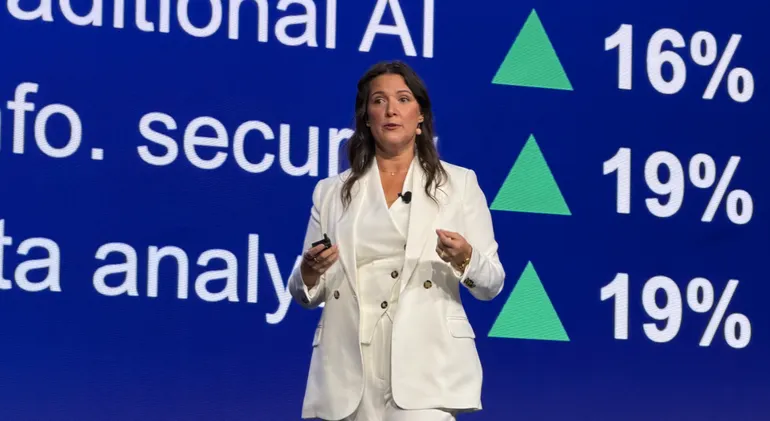
A Gartner survey of 2,002 CIOs and technology executives found that only 4% have plans in place to redesign roles for an agentic era workforce. Those that do are 2.4 times more likely to be top AI performers. With 58% facing increased demand for cost improvements from AI investments and just 13% reporting significant value from AI, many CIOs are deprioritizing workforce strategy. Gartner VP Analyst Alicia Mullery says CIOs can elevate the conversation by addressing AI's workforce impact, from role scope shifts to salary dynamics.
Dive Brief:
- While information technology costs mount, most chief information officers are skirting the deep redesign needed for the transition to an agentic era workforce, according to Gartner on Oct. 19. The analyst firm surveyed 2,002 CIOs and technology executives for the 2027 CIO and Technology Executive Agenda report.
- Just 4% of CIOs reported plans in place to revamp roles with a human-agent workforce in mind, according to the report. Enterprises that do are 2.4 times more likely to be top performers with AI and have their CEOs report value from AI.
- “If you do not have a workforce that is ready to operate in this world that deals with this level of AI agents and governance … the costs are going to be played out because you’re going to have a team that can’t effectively deliver on it,” Alicia Mullery, VP analyst at Gartner, told CIO Dive.
Dive Insight:
The CIO task list has broadened in recent years as businesses ask tech executives to not only keep watch over IT modernization, budget discipline, AI experimentation and broader business outcomes, but also play a more active role in workforce strategy. The blitz has led many CIOs to place talent on the back burner.
Costs are top of mind, with 58% of leaders reporting increased demand from their companies to deliver cost improvements from prior AI investments, according to Gartner.
“Pressure is coming from the CEO, boards and leadership,” said Mullery, as CIOs are asked to show swift returns. “I think we’ve passed the time of endless scale.”
Pressure alone has failed to translate into meaningful value, according to Gartner, as just 13% of CIOs are reporting significant or transformational value from their AI investments. Because of the project value conundrum, many CIOs have invested less time and resources into workforce redesign.
“There is so much that’s a top priority that I think sometimes technology — the cost of it, managing that out — can overshadow some of the talent pieces because it’s not as immediate as an expensive bill that’s coming in,” Mullery said.
CIOs can change that. They can help convey to other C-suite leaders the importance of addressing AI’s effect on the workforce, from the scope shift of specific roles to salary dynamics, especially as AI scales across the enterprise.
“That I think elevates the CIO to a more strategic conversation that the rest of the C-suite is very interested to talk about,” Mullery said.